
In the era of explosive digitalization, 3D/360 technology has emerged as a breakthrough advancement, transforming the way we experience products, spaces, and processes into something more vivid, intuitive, and interactive than ever before. From touring constructions, conducting field surveys, to product simulations or technical training – 3D/360 offers the ability to observe a 360° panoramic view, rotate, zoom, and analyze each layer of an object in detail. Not only is it a visual tool, but 3D/360 technology also creates real value, helping businesses optimize costs, enhance operational efficiency, while providing a profound, accurate, and reliable user experience. In this article, you will explore the outstanding benefits of 3D/360 – the factors that make this technology a strategic advancement in every field of digitalization.
I. What is 3D/360 technology?
1. Definition of 3D/360 Technology – When Reality Enters the Digital World
In an era where all senses can be digitized, 3D/360 technology is becoming the "new language" of experience. Essentially, 3D/360 technology is the quintessential combination of three-dimensional modeling and 360-degree panoramic observation, allowing viewers to feel as if they are "walking in the real world." Thanks to 3D/360 technology, businesses can bring products, spaces, heritage, or factories into the digital realm in a vivid way – something that 2D images or traditional videos can never achieve.
The emergence of3D/360 technologyhas opened up an era where every surface, every texture, and every line is recreated with astonishing depth and realism. Whether in real estate, tourism, education, industry, or commerce,3D/360 technologyprovides the ability to simulate reality, allowing users to rotate, zoom in, zoom out, and move through space with a sense of immersion.
Therefore, it is no surprise that 3D/360 technology is growing at a rate of over34% per year(according to Markets&Markets), becoming one of the “growth engines” of global digital transformation.
See more>>>>>3D scanning technology and why it is ahead of its time?
2. Why does 3D/360 technology create a turning point for digital experiences?
The superiority of3D/360 technologycomes not only from its simulation capabilities but also from its emotional impact. Thanks to3D/360 technology, a room, a product, or an entire tourist area can tell its own story through a "realistic" perspective. When viewers can interact directly, they do not just see – they feel, experience, and remember more deeply.
In customer behavior studies, the experience of using content based on3D/360 Technologyhelps increaseinteraction by 300%, increasestime spent on the page by 5–7 times, and raises the conversion rate by20–40%compared to static images. This proves that3D/360 Technologyis not only “beautiful” but also “worth it.”
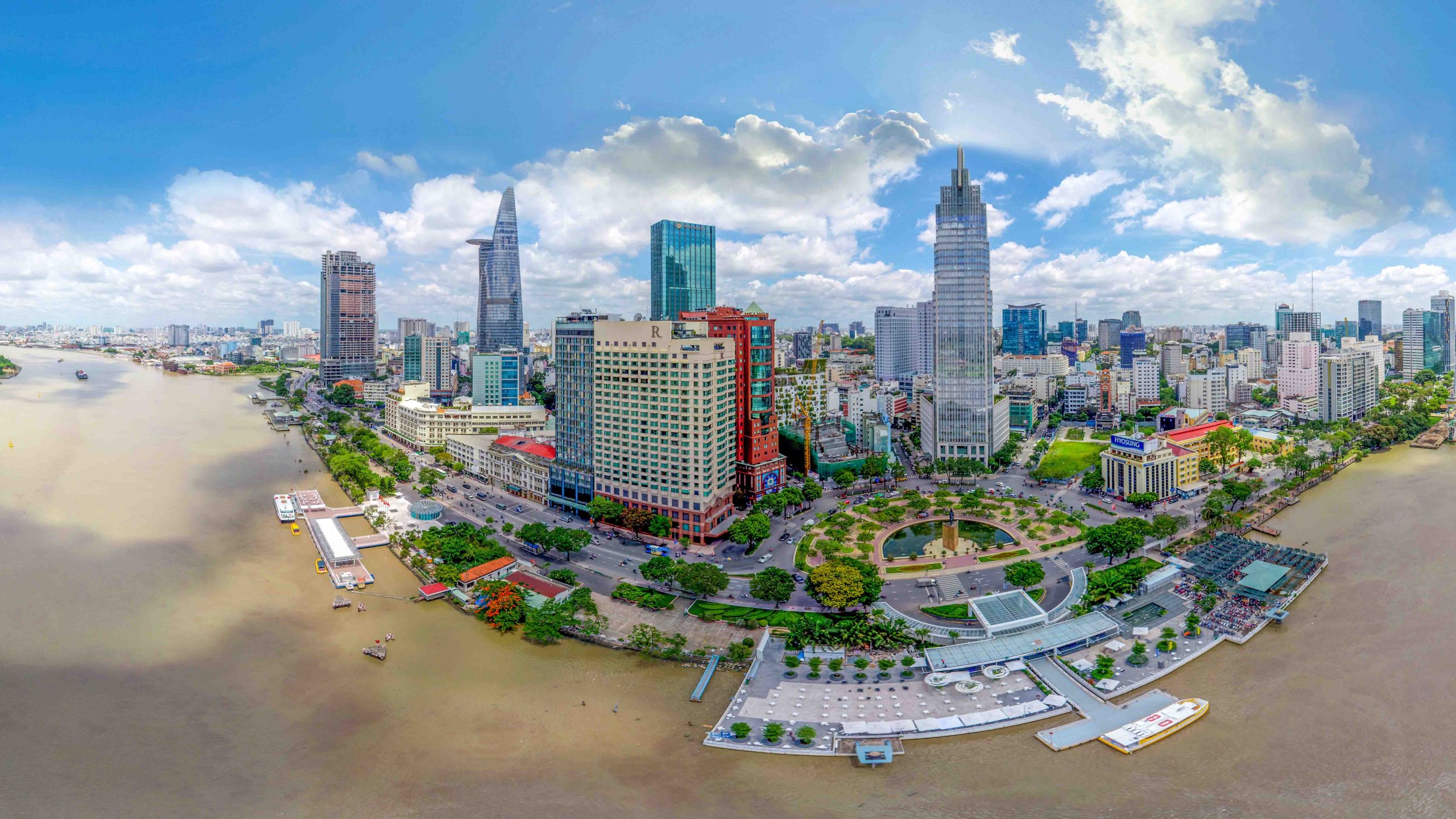
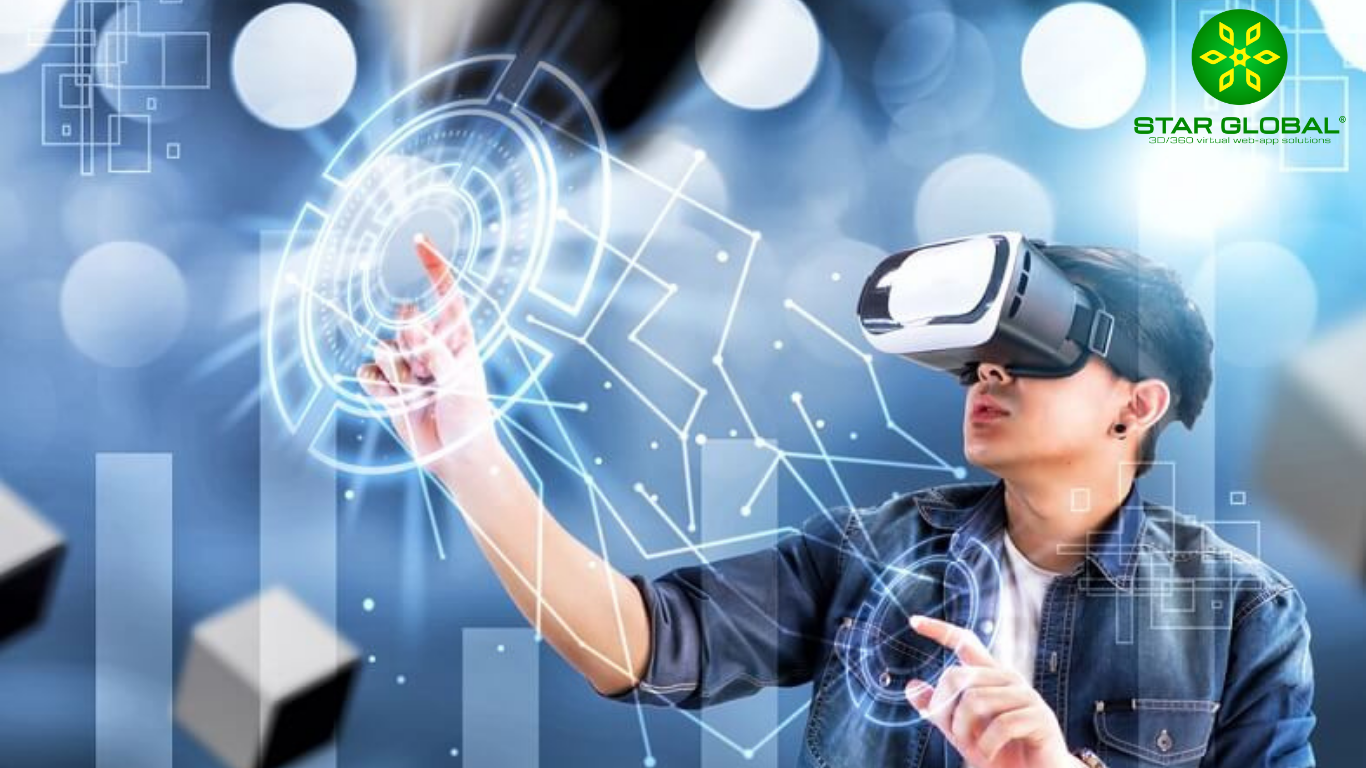 Explore the digital space with 3D/360 Technology – where every angle becomes intuitive and inspiring
See more>>>>>Museums in Ho Chi Minh City apply technology to attract visitors
II. Popular forms in 3D/360 Technology
3D/360 Technology is not just a single feature, but has actually developed into adiverse ecosystemcomprising many techniques & forms — each form suitable for different needs (virtual tours, sales, training, simulations, etc.). Below are the main types widely recognized, withreferences from the industry.
1. 360 Virtual Tour (360° Virtual Tour / 360° Panorama)
Definition & method: A “virtual tour” is a simulation of a real location – usually created from 360° panorama images, wide-angle photos, or multiple static images/videos linked together so that viewers can move, rotate their viewpoint, and “tour” the space as if they were actually there.
Practical applications: 360° virtual tours are very popular in real estate (viewing model homes, apartments, projects), hotels/resorts, museums, schools, showrooms.Therefore, 360 Virtual Tour is a key component in the 3D/360 Technology ecosystem — especially for virtual tour needs, real estate showcasing, or space.
See more>>>>>The difference between 3D Virtual Tour technology and 360 Virtual Tour
2. Interactive 3D model
Definition & features: This is a 3D model (mesh, texture, lighting, materials…) that can be rotated, zoomed in/out, interacted with (rotating, moving, selecting details), sometimes combined with hotspots, annotations, specifications, animations.
Role in 3D/360 Technology: Interactive 3D models provide a detailed, “tangible” experience in the digital space — very suitable for ecommerce (products, furniture, equipment), design, industry, product marketing. When integrated into a 360/VR environment, interactive 3D models elevate the user experience: they not only view the general space but also see details of each object and interact deeply.
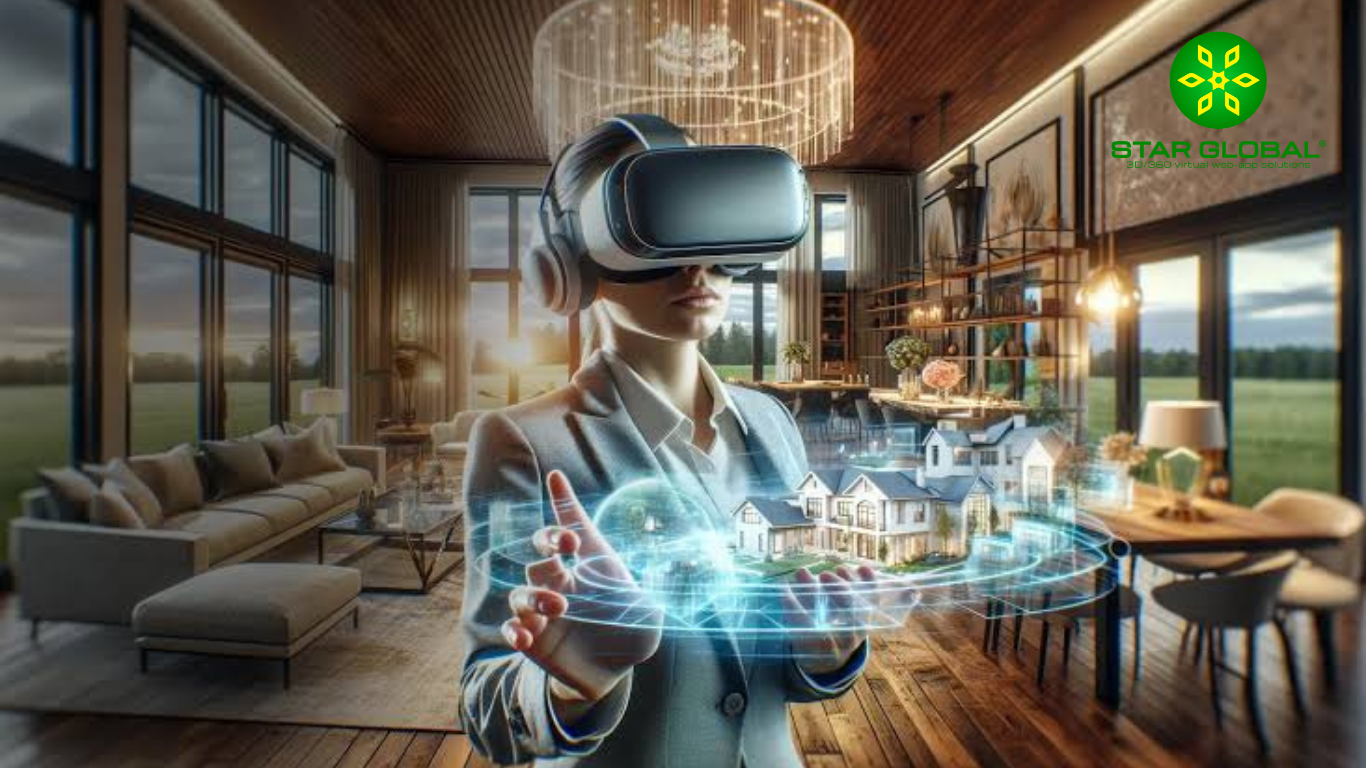 Explore every angle of 3D/360 space – view the panorama with just one touch
3. 360° Video
Technical definition: 360° video (360-degree video) is a type of panoramic video – capturing the surrounding environment at a 360° angle, then processed with special techniques to display for viewers to rotate/look in every direction.
Applications: Suitable for travel, events, quick virtual reality experiences, emotional marketing, space illustration – where viewers want to “stand in the space” rather than just look from the outside. When combined with VR devices, 360° video creates an immersive experience, helping viewers “feel” the space in a more vivid way. Many service providers of “VR tour / 360 VR Tour” use 360 video or 360 photos to create virtual tours.
4. VR Space / VR 360°
General Definition: When combining 360° images/videos + 3D models + interactivity + VR devices (virtual reality glasses), you create an “immersive” environment — users not only watch but feel like they are “stepping into” a virtual space, able to move around, view from all angles, and interact. This is the form many people refer to when talking about “VR 360 virtual reality.”
Practical Applications: In real estate (virtual model home tours), virtual tourism, virtual museums, virtual showrooms, training — where the most realistic experience is needed. A study using VR360 in tourism in Vietnam shows that users are very satisfied with the virtual experience, perceiving it as “real” and easy to visualize the actual space.
- Special Advantages: Immersive experience, realistic feel – very suitable when conveying space, layout, lighting, depth; strongly supports marketing, sales, training, cultural promotion – heritage sites, etc.
5. 3D Scan / Photogrammetry / 3D Scanning + Reconstruction
Definition & Process: Photogrammetry (taking photos from multiple angles, using algorithms to recreate a 3D model), or 3D scanning (laser scan, LiDAR…) to digitize real objects/spaces — then creating a “realistic” 3D model with mesh, texture, and real scale.
Role in the 3D/360 Technology Ecosystem: When high accuracy is needed — museums, heritage sites, terrain surveys, architectural models – 3D scanning + photogrammetry helps create accurate models in terms of scale, shape, and texture. This model can then be used as a “base” for interactive 3D models or embedded into VR 360, virtual tours, etc.
Advantages: Realistic models, accurate scale, measurable, usable for techniques, analysis; suitable for specialized applications such as engineering, industry, conservation, urban planning...
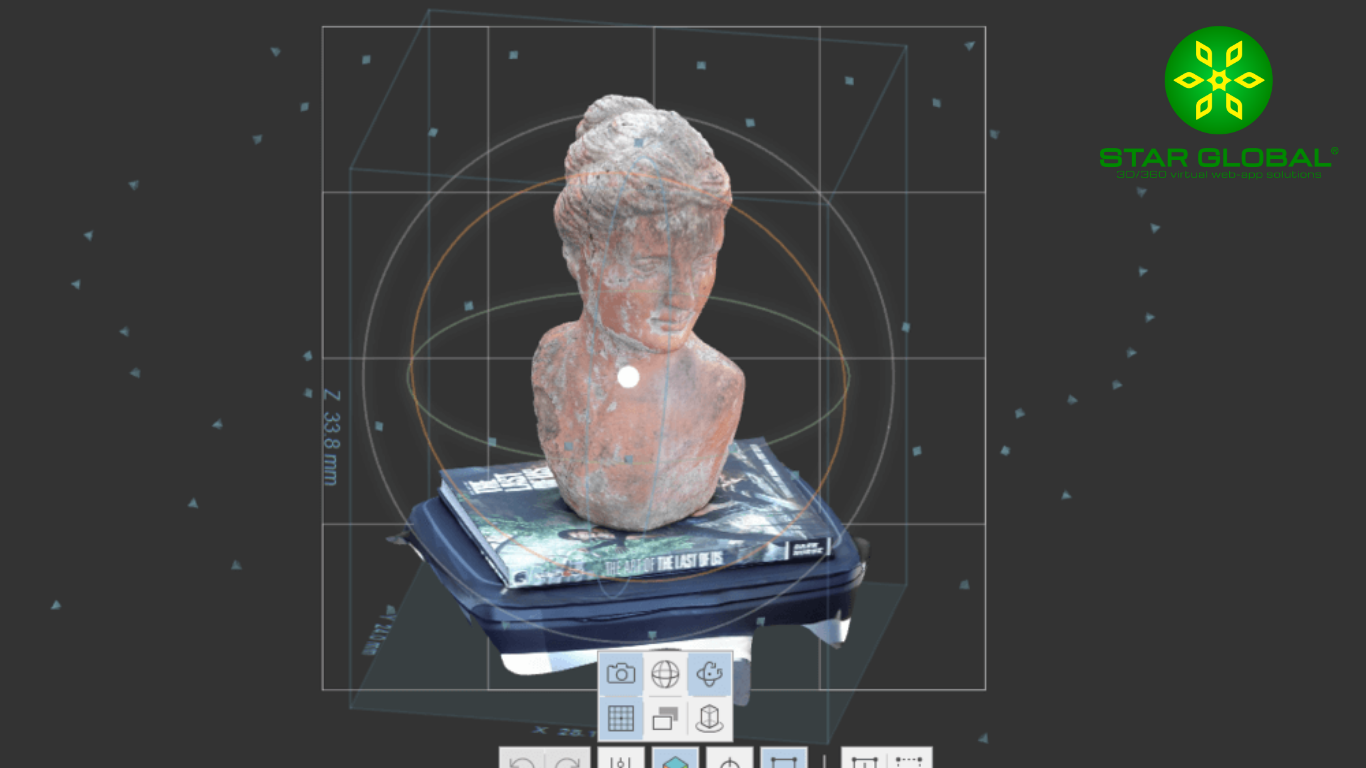 3D Scan – Realizing every detail in the digital space
See more>>>>>Comparing VR 360 technology and 3D Scanning
II. Outstanding benefits that 3D/360 technology brings to businesses & users
In the context of businesses entering a strong digital transformation phase, the need to convey information in arealistic – visual – reliableway has become more important than ever. 3D/360 technology emerges as a solution to simulate products, spaces, and data in ways that traditional 2D images cannot. Below are thecore benefitsthat make 3D/360 the new standard of modern digital experience.
1. Superior visualization – Helps viewers "understand correctly" from the first time
3D/360 technologyhas the ability tosimulateobjects, structures, processes, or spaces with a level ofmuch higher accuracythan traditional photos or videos. Thanks to the360° panoramic viewcombined with3D modelsthat canrotate – zoom – dissect layer by layer, users receive informationmore comprehensivelymore deeply, andmore visually. This is especially important for industries that requireaccuracy: architecture, preservation, STEAM education, manufacturing, topographic surveying, or scientific research. Thisvisualizationhelpsreduce information distortion.giảm sai lệch thông tin, reducing misunderstandings and supporting the decision-making process (viewing project designs, evaluating materials, observing the site, cultural surveys…). This is a benefit recognized by many international studies: simulation.3D/360helpsincrease memory retentionandspeed up information acquisitioncompared to the usual 2D images.
2. Remote experience – Eliminating spatial and temporal barriers
One of the most noticeable benefits of 3D/360 technologyis the ability toaccess spaces remotelyfrom anywhere. Instead of having to travel to the site – which is time-consumingand costlythời gian, or difficult to achieve (for example: factories, construction sites, monuments, mountainous areas, reserves) – users can experience the entire context through hoặc khó khả thi (ví dụ: nhà máy, công trường, di tích, vùng núi, khu bảo tồn) – người dùng có thể trải nghiệm toàn bộ bối cảnh qua 360° tours, 3D mapsorVR simulations.. This ability toaccess remotelyopens up many values: students can visit museums without moving, engineers cansurvey construction sites remotely, managers canmonitor infrastructurewithout needing to be there in person. In the context ofcomprehensive digitization, this is a practical benefit, not exaggerated – and has been applied by many countries in education, industry, and culture., không phóng đại – và đã được nhiều quốc gia ứng dụng trong giáo dục, công nghiệp và văn hóa.
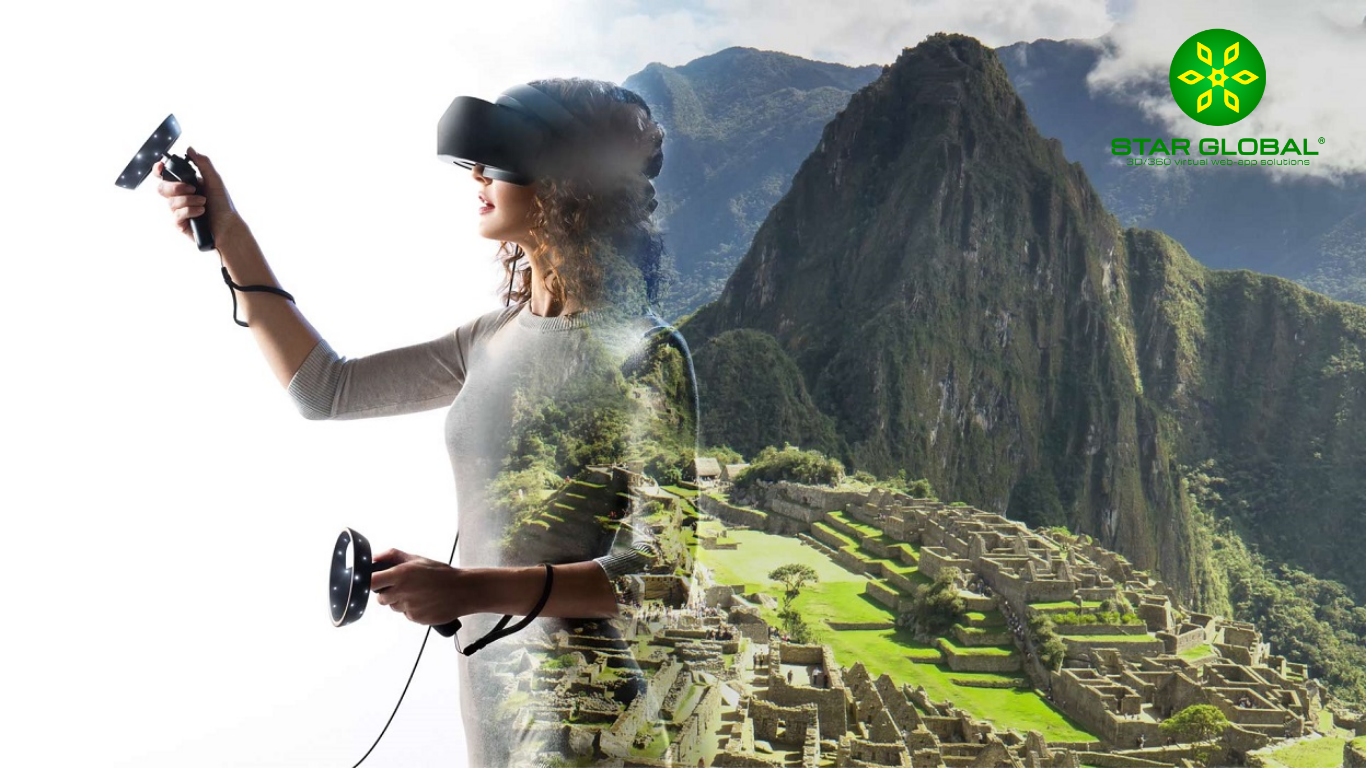 3D/360 technology – Digital experiences that transcend all spaces
See more>>>>> Experience a virtual tour of the Ajinomoto factory from afar
3. Optimize long-term costs – Create reusable digital assets
A space or object after being created with Technology3D/360canbe reusedfor many purposes without the need to film – take photos – or set up multiple times. This is the factor that helps businessesreduce long-term content production costscompared to traditional methods that are labor-intensive, equipment-heavy, and time-consuming. Not only reusable, the model3D/360can also beflexibly edited: change colors, change materials, update to new versions, add information… without having to start over. This makes technology asustainable solutionfor businesses looking to optimizebudgetswhile still maintaining high-quality communication and training.
4. Easy multi-platform integration – From web, app to VR/AR
Another important benefit of Technology3D/360is its highcompatibility.. With just one original data, businesses can export multiple versions: view360° on the web, simulate3D on the app, incorporate intoVR, integrateAR, present at events or use for training. This helps businesses not be limited by devices or platforms. Thanks to thisflexibility, Technology3D/360can serve multiple audiences: visitors, students, engineers, managers, partners… without the need to create separate content versions. This is a practical benefitthat has been applied by many global 3D/360 platforms to optimizeworkflowand enhance deployment efficiency.3D/360 technology – From Web to VR/AR, vibrant digital experiences, optimal interaction
 5. Supports training, guidance, surveying & accurate monitoring
3D/360 technology
allowssimulation of environments, equipment, operational processes, or real-world contexts fortrainingandtechnical guidance.Theimmersivevisual experienceand the ability to observe from multiple angles help learners understand faster, reducing, when entering real practice. This is why this technology is widely used in training for machine operation, safety procedures, installation, or equipment maintenance. In the field ofsurveying & monitoring, 3D/360 technologyhelpsaccurately record the current state, supporting space inspection without the need to be physically present on-site. Contractors, architects, and technical experts can evaluate 3D data in adetailed, thereby enhancing monitoring efficiency, reducing errors, andshortening processing timefor tasks.See more>>>>>, từ đó nâng hiệu quả giám sát, giảm lỗi và rút ngắn thời gian xử lý công việc.
Xem thêm>>>>> The potential future applications of VR360 technology
CONCLUSION:
Technology3D/360is becominga pillar for superior digital experiences, helping businesses and organizationsrealize ideas, visualizing spaces and productsaccurately and vividly. The flexible interaction capabilities, cross-platform integration, and detailed information provision make3D/360 technologynot just a tool, but astrategic solutionto enhance operational efficiency, training, and management.Star Global, with strengths in3D/360 technology, is pioneering fully digital solutions, helping businesses, giúp doanh nghiệp optimize experiences, ensure information transparency, and create sustainable competitive advantagesin the digital age. Investing in this technology is a strategic move to lead and shape the future.