
In the age of data explosion, the speed of information processing determines competitive advantage. Therefore,Real time datais no longer just a technical concept. It has become the core foundation of all modern digital systems.
Previously, businesses often processed data in batches. However, this method created significant delays. This made business decisions no longer accurate at the moment.
On the contrary,Real time dataallows data to be processed as soon as it is generated. As a result, businesses can react instantly to market fluctuations. This is especially important in fields such as AI, IoT, and 3D/360 space digitization.
Additionally, according to a report from IBM, more than 60% of businesses are shifting to real-time data processing models to optimize operations. This number is expected to continue to rise sharply during the global digital transformation.
I. What is real time data?
1.1 Definition of Real time data
Real time datais data that is collected, processed, and transmitted almost immediately after it is generated. Typically, the delay only ranges from a few milliseconds to a few seconds.
In other words,Real time datahelps systems “see” what is happening at the current moment. This is a significant difference compared to traditional data.
Currently,Real time datais widely applied in many fields. For example, smart traffic systems useReal time datato coordinate traffic lights. Meanwhile, e-commerce platforms leverageReal time datato suggest products based on user behavior.
Not only that,Real time dataalso plays an important role in building Digital Twin. Thanks to continuously updated data, the 3D model can accurately reflect the actual state.
Finally, it can be simply understood thatReal time datais the "live data stream" of modern digital systems.
See more>>>>>>What is Real-time Data Analytics? Some practical application cases
 1.2 How Real time data works
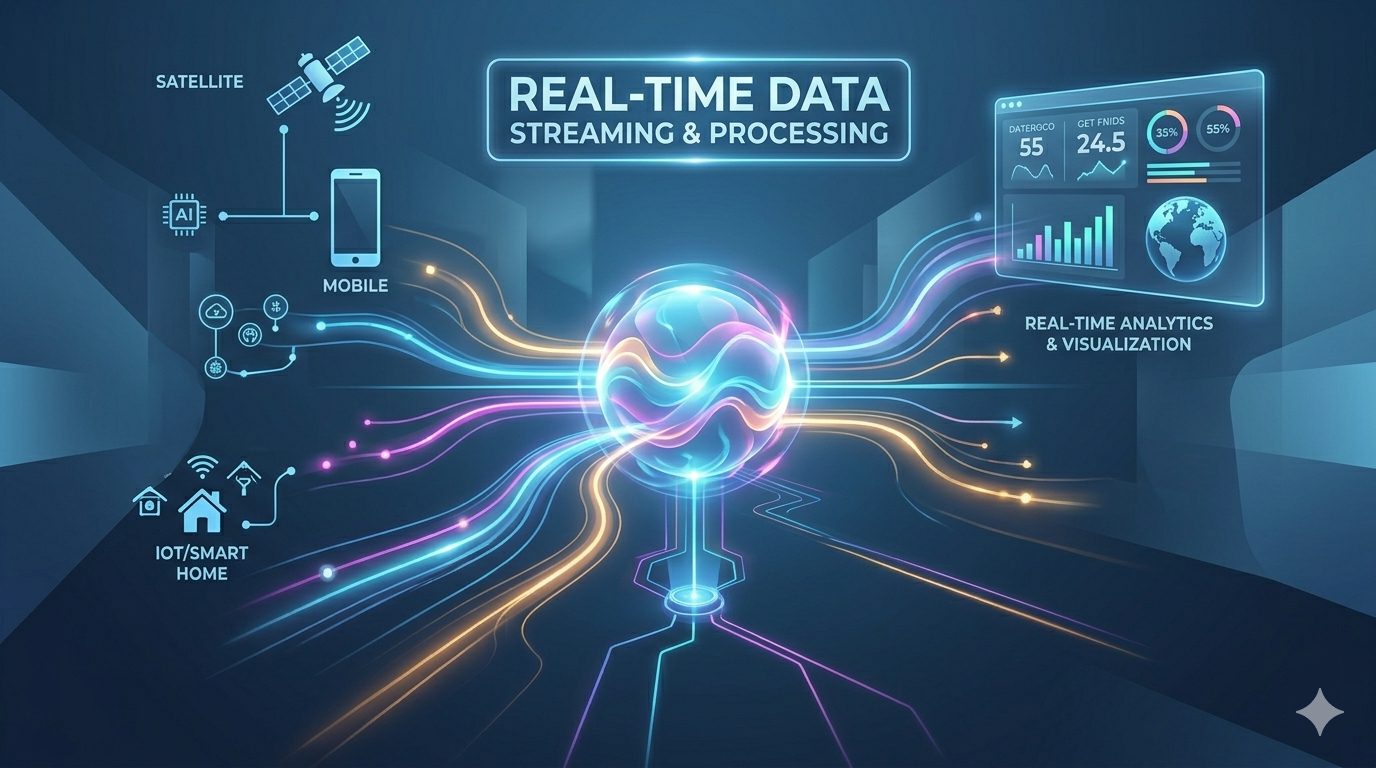
To understand better, let's look at the operational process ofReal time data. Typically, the system will go through 4 main steps.
Step 1: Data collection
Data is collected from IoT sensors, mobile devices, or software systems. This is the input source ofReal time data.
Step 2: Data transmission
Then, the data is transmitted over the internet or cloud. Thanks to streaming technology,Real time datais sent almost instantly.
Step 3: Data processing
Here, AI or the analytics system will processReal time data. This process helps generate valuable insights.
Step 4: Feedback
Finally, the system takes action. For example, alerts, dashboards, or automatically adjusting devices.
Notably, the entire process occurs continuously. Therefore,Real time datais always updated and accurately reflects reality.
See more>>>>>>What is a Data Pipeline? An overview of the data processing workflow in modern systems
1.4 Key Features of Real-Time Data
It is not by chance thatreal-time datahas become a global trend. Below are the most prominent features.
Timeliness:Data is processed as it is generated. As a result, real-time data helps respond quickly to events.
Continuity:Data is continuously updated. This keeps the system always “alive.”
Actionability:Real-time data is not just for viewing. It also helps make immediate decisions.
Automation:When combined with AI, real-time data allows the system to operate autonomously without intervention.
Especially in the digitization of 3D/360 spaces, these features make the models more intuitive and accurate.
 II. Applications of real-time data in AI, IoT & 3D/360
2.1. Applications of real-time data in IoT (Internet of Things)
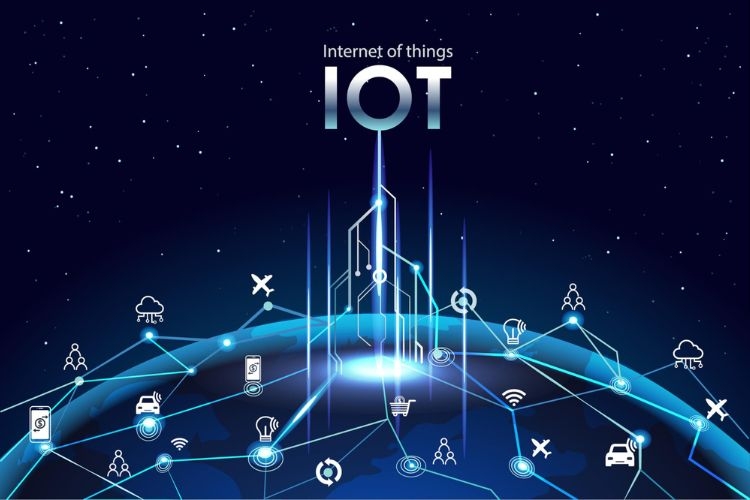
In the IoT ecosystem,real-time dataplays a central role. Devices such as sensors, cameras, or machinery continuously generate data. As a result,real-time datahelps the system respond immediately when events occur.
For example, in smart cities,real-time datais used to coordinate traffic. When traffic volume spikes, the system automatically adjusts traffic lights. This helps significantly reduce congestion.
Additionally, in manufacturing,real-time datahelps monitor the condition of machinery. If abnormalities are detected, the system will alert immediately. As a result, businesses reduce downtime and maintenance costs.
According to Cisco, IoT can generate billions of data points every day, and most of them arereal-time data.
See more>>>>>>Overview of the logistics industry: Does the application of IoT in operations really bring benefits?
2.2. Application of real-time data in AI (Artificial Intelligence)
AI becomes more powerful when it is "nourished" byreal-time data. Instead of learning from old data, AI systems can continuously update and make immediate decisions.
For example, in the field of image recognition, AI cameras usereal-time datato detect faces or unusual behaviors. This is particularly useful in security and retail.
Furthermore,real-time datahelps improve the accuracy of predictive models. When data is continuously updated, AI can accurately reflect current trends.
In addition, modern chatbots also rely onreal-time datato respond quickly. This significantly enhances the user experience.
According to Microsoft, combining AI withreal-time datacan increase decision-making efficiency by up to 40%.
2.3. Application of real-time data in 3D/360 space digitization
In the field of space digitization,real-time datais not just data. It is the factor that makes 3D/360 space come to life.
a. Real time data in Digital Twin (digital replica)
Digital Twin is only truly valuable when updated withReal time data. At that point, the 3D model can accurately reflect the state of the real-world object.
For example, in a factory,Real time datahelps monitor temperature, pressure, and machine performance. If there is an issue, the system will detect it immediately.
Furthermore,Real time dataallows businesses to simulate operational scenarios. This way, they can optimize processes before applying them in reality.
According to Gartner, by 2027, more than 70% of businesses will implement Digital Twin combined withReal time data.
See more>>>>>>What is Digital Twin? Strategic trends in the digital age
b. Real time data in Scan to BIM and construction management
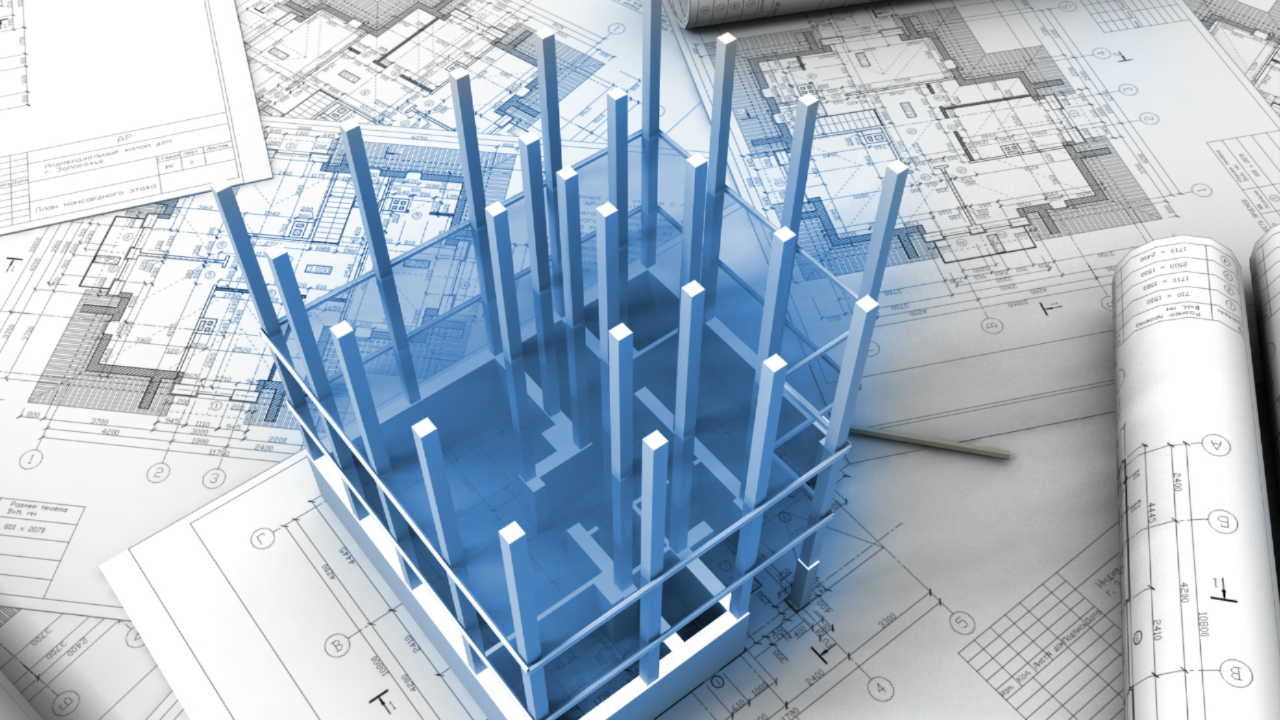
In construction,Real time datahelps enhance accuracy and transparency. When combined with LiDAR and Point Cloud, spatial data is continuously updated.
Thanks toReal time data, engineers can track project progress in real time. If there is a discrepancy between the design and reality, the system will detect it immediately.
In addition,Real time dataalso helps synchronize data among multiple stakeholders. This reduces conflicts and optimizes project costs.
In particular, modern BIM platforms all integrateReal time datato improve management efficiency.
 Xem thêm>>>>>> BIM là gì? Lộ trình áp dụng BIM trong hoạt động xây dựng gồm giai đoạn nào?
III. Real case study: Real time data in the PQPOC Phu Quoc project of Star Global
3.1. Overview of the PQPOC project and the digital transformation challenge
In the oil and gas industry, data is not just an asset. It is also a determining factor forsafety – operations – costs.Therefore, organizations like Phu Quoc Petroleum Operating Company (PQPOC) are accelerating digital transformation.
PQPOC is the operator of the Block B gas project offshore Vietnam, with a large scale and high complexity.
In this environment, manual monitoring is almost ineffective. Therefore, the demand forReal time datahas become urgent.
Specifically, PQPOC needs:
- To monitor offshore equipment in real time
- To detect incidents immediately
- To optimize operations and reduce risks
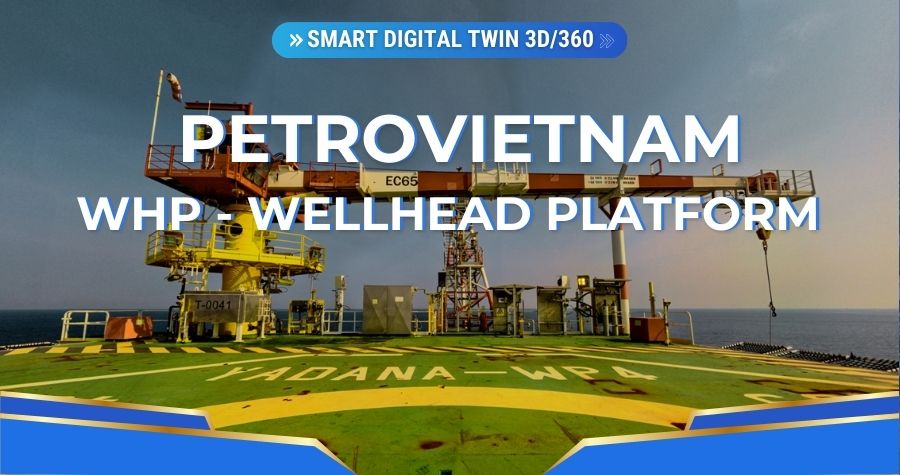 See more>>>>>> Experience the PQPOC Phu Quoc rig through Digital Twin 3D/360 technology
3.2. Digital Twin 3D/360 solution integrating Real time data from Star Global
To solve this problem, Star Global has implemented a platformDigital Twin 3D/360 integrating Real time data.
The core of the system is:
- 3D/360 model of the rig and equipment system
- Directly connected to IoT sensors
- Displaying dataReal time datadirectly in the digital space.
In particular, Star Global's technology has been patented for the Digital Twin system integrating real-time data.
Thanks to this,Real time datano longer located on the traditional dashboard. Instead, it is 'directly attached' to each device in the 3D model.
See more>>>>>>Applications of Digital Twin in 9 prominent industries
3.3. Application of Real time data in IoT fire alarm monitoring
One of the most important applications isthe real-time fire alarm system.
In the oil and gas environment, the risk of fire and explosion is very high. Therefore,Real time datafrom thermal, smoke, and gas sensors is continuously collected.
When there are abnormal signs:
- The system usesReal time datato immediately detect
- Alerts are displayed directly on the 3D model
- The fire location is accurately identified
As a result, the operations team can respond much faster than traditional methods.
This is the significant difference ofReal time datawhen combined with Digital Twin.
See more>>>>>>IoT monitoring solutions in manufacturing industry
3.4. Application of Real time data in monitoring drilling equipment
In addition to safety,Real time datais also used to monitor the status of equipment.
Key parameters include:
- Pressure
- Temperature
- Flow rate
- Operating status
All this data is continuously updated in the form ofReal time data.
More importantly, the data is not just displayed in numerical form. It is directly mapped to the device in a 3D/360 model.
For example:
- Look at the pump → immediately see the current temperature
- Observe the pipeline → know the pressure is changing
- Monitor the entire system → detect anomalies
According to research on Digital Twin in the oil and gas sector, the integration ofReal time datahelps:
- Increase operational accuracy
- Reduce incident risks
- Optimize system performance
3.5. Real value: When Real time data transforms a "static" system into a "live" one
The biggest breakthrough of this project is not in 3D. It lies inReal time data.
Previously:
- Data was on the control panel
- Operators had to read and analyze
Currently:
- Real time datais visually displayed in 3D space
- Users "see and understand"
- The system can automatically alert
Furthermore, when combining AI and IoT,Real time datahelps:
- Predict incidents
- Optimize maintenance
- Reduce downtime
This is the direction of the oil and gas industry in the era of digital transformation.
See more>>>>>>Application of artificial intelligence in the oil and gas and energy sectors
Conclusion:
In summary,real time datanot only is it a core platform that helps businesses respond quickly to any changes, but it also plays a key role in drivingAI, IoT, and digital transformationstrong development. The exploitation of real-time data helps optimize operations, enhance user experience, and create sustainable competitive advantages. In this context,Star Global is pioneering the application of real-time data into digital solutions such as Digital Twin, 3D/360, and intelligent monitoring systems, contributing to bringing businesses closer to a modern, flexible, and efficient operational model in the digital age.